
While the pine processionary caterpillar has been in the news more frequently lately, it shouldn’t ruin your hiking fun. With the right knowledge and a bit of extra caution, you can still safely enjoy a beautiful hike in nature.
Awareness is Key
The greatest risk comes from a lack of awareness. When you know what to look for, direct contact is easy to avoid. These caterpillars are primarily active between January and May.
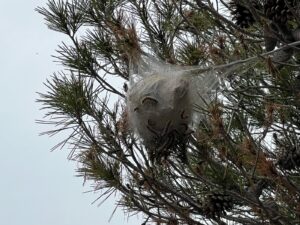
Hikes can go on as usual: There is no need to avoid the forests. Stick to the paths, keep your dog on a leash in pine-rich areas, and do not touch the characteristic white ‘nests’ in the trees.
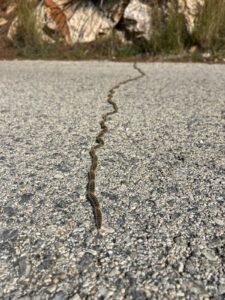
Look up and down: You will see the nests in the trees, but on the ground, you might see the caterpillars crossing the path in a long ‘procession’ (one after the other).
Usually Harmless, But Annoying
In the vast majority of cases, the impact on humans is limited to a mild skin reaction.
Itchy bumps: If you come into contact with the stinging hairs, you will often get red, itchy bumps similar to a reaction from stinging nettles.
Quick recovery: This irritation is usually harmless and typically disappears on its own within a few days to a week.
Golden Rule: Do not scratch! By scratching, you spread the tiny hairs across your body and rub them deeper into the skin, which worsens the symptoms. For mild cases, a soothing gel (such as aloe vera or menthol) is often sufficient.
Take Extra Care with Your Dog
For our four-legged friends, the risk is unfortunately higher because they walk with their snouts close to the ground and may lick the caterpillars out of curiosity.
Prevention: Keep your dog on a short leash when walking through a pine forest.
If in doubt: Has your dog sniffed or licked a caterpillar? Rinse the mouth immediately with plenty of water and call the vet just to be safe. Quick action prevents serious damage, such as tissue loss on the tongue.
In short: Don’t be discouraged, just be prepared. A beautiful walk in the fresh air is perfectly fine, as long as you leave the ‘hairy strings’ on the ground and the ‘cotton balls’ in the trees alone!
Aunque se hable mucho de la procesionaria del pino últimamente, esto no tiene por qué arruinar tus ganas de hacer senderismo. Con la información adecuada y un poco de atención, puedes seguir disfrutando de la naturaleza con total seguridad.
La clave es la prevención
El mayor riesgo es no saber identificar el peligro. Cuando sabes qué buscar, es muy fácil evitar el contacto directo. Estas orugas están activas principalmente entre enero y mayo.
Las rutas pueden continuar: No es necesario evitar los bosques. Mantente en los senderos, lleva a tu perro atado en zonas de pinos y no toques los característicos ‘nidos’ blancos en las copas de los árboles.
Mira hacia arriba y hacia abajo: Verás los nidos en los árboles, pero en el suelo verás a las orugas cruzando los caminos en una larga ‘procesión’ (una detrás de otra).
Normalmente inofensivo, pero molesto
En la gran mayoría de los casos, el efecto en los humanos se limita a una reacción cutánea leve.
Ronchas con picor: Si entras en contacto con los pelos urticantes, suelen aparecer ronchas rojas que pican, de forma similar a la picadura de una ortiga.
Recuperación rápida: Esta irritación suele ser inofensiva y desaparece por sí sola en unos pocos días o una semana.
Regla de oro: ¡No te rasques! Al rascarte, esparces los pelitos por el cuerpo y los clavas más profundamente en la piel, lo que empeora los síntomas. Para molestias leves, un gel calmante (como aloe vera o mentol) suele ser suficiente.
Especial atención a los perros
Para nuestros amigos de cuatro patas, el riesgo es mayor porque caminan con el hocico pegado al suelo y pueden lamer a las orugas por curiosidad.
Prevención: Lleva a tu perro con correa corta cuando pasees por un pinar.
En caso de duda: ¿Tu perro ha esnifado o lamido una oruga? Enjuágale la boca inmediatamente con abundante agua y llama al veterinario por precaución. Actuar rápido evita daños graves, como la necrosis en la lengua.
En resumen: No dejes que esto te detenga, solo ve preparado. ¡Un paseo al aire libre es perfectamente posible siempre y cuando dejes en paz a las ‘hileras peludas’ del suelo y las ‘bolas de algodón’ de los árboles!
